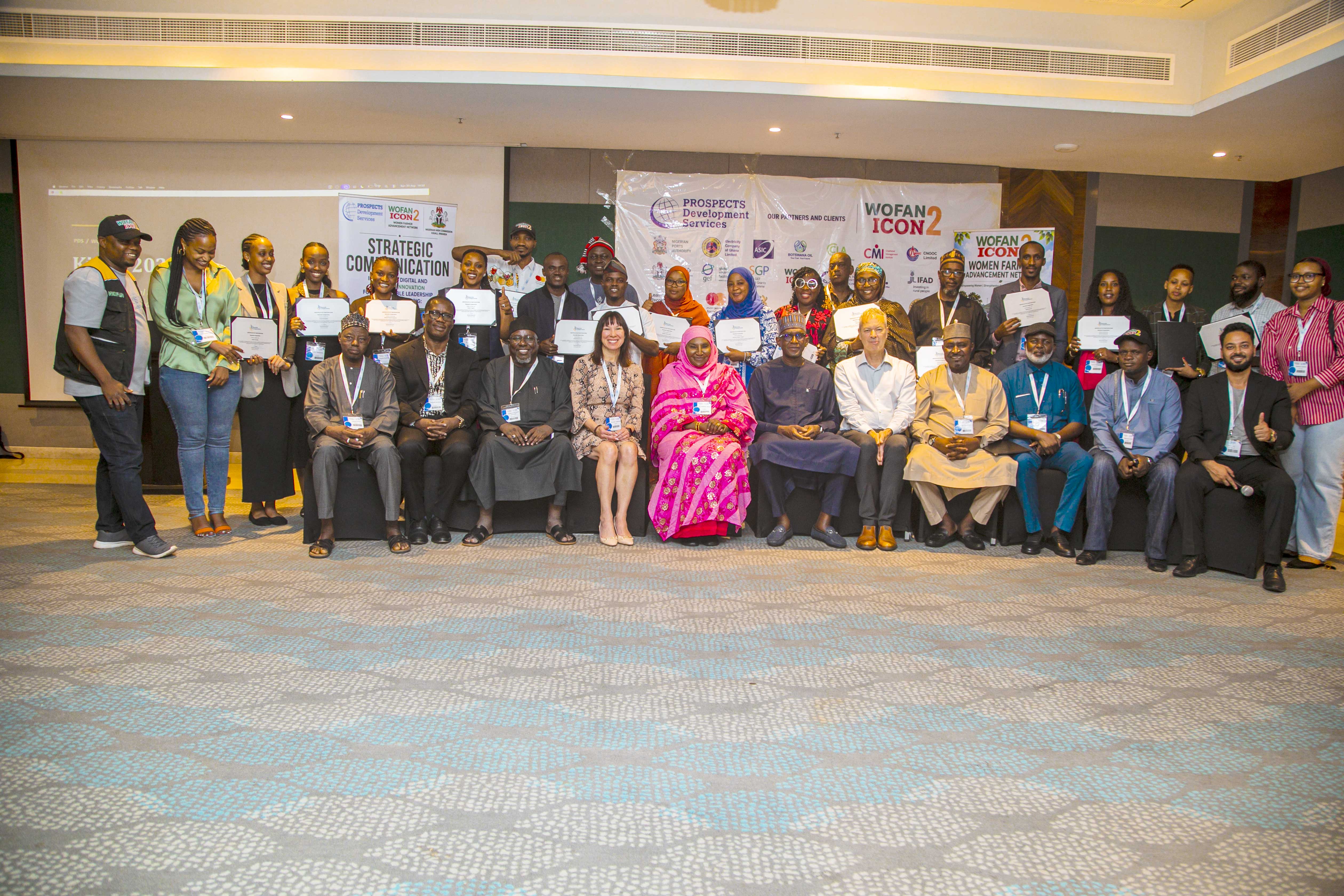
The Women Farmers Advancement Network (WOFAN), Prospects Development Services (PDS-UK), other regional and international participants have unveiled an action plan to apply strategic communication, digital tools and artificial intelligence (AI) in leadership, decision-making and peacebuilding.
The action plan was announced at the end of a four-day international training in Kigali, Rwanda, which commenced on Thursday, August 27, 2026, under the theme, “Strategic Communication Integrating Digital and AI-Driven Innovation for Sustainable Leadership and Peacebuilding: Rwanda as a Case Study for Digital Transformation and Post-Conflict Reconstruction.”
The training was organised in collaboration with WOFAN-ICON2, PDS-UK and the Nigerian High Commission in Kigali, with participants drawn from the media, Nigeria’s National Assembly, academia, education, women and youth networks, and the community and development sector.
At the end of the programme, participants pledged to share the knowledge gained with their colleagues and communities and translate the lessons into immediate, medium- and long-term actions within their respective institutions and communities.
On her part, WOFAN Executive Director and Global Advocate, Dr Salamatu Garba, said the training was designed to provide practical skills rather than serve as a “talk shop.”
She said effective strategic communication involves understanding audience needs, listening to their concerns and building trust to encourage citizens to take greater responsibility for addressing local challenges.
In his remark, the PDS-UK Founder and Chief Executive Officer, Bayode Tokumbo Hambolu, said the value of the training would ultimately be measured by its impact beyond the classroom.
He added that PDS-UK courses are accredited by the UK-based Accreditation Service for International Schools, Colleges and Universities (ASIC).
Nigeria’s Acting High Commissioner to Rwanda, Ambassador Ibrahim G. Zanna, stressed the importance of strategic communication, particularly in addressing misinformation on social media, which he said could quickly inflame tensions.
He also highlighted Rwanda’s practice of consulting stakeholders before policies are finalised, rather than seeking public support after programmes have already been designed.
Professor Sani Miko, Chairman of the Board of Technical Advisers of the WOFAN-ICON2 Project, said communication enables organisations to better understand the people they serve, while AI could accelerate design, feedback and response when used under appropriate human oversight.
One of the facilitators, Adrian Webb, noted that despite the growing role of AI in organisational communication, “we are humans communicating with humans.”
A National Assembly staff member, Shehu Umar, said he would apply the knowledge gained from the training in his work at the legislature, while Rwandan participant Wellars Mucyo said the programme had strengthened his understanding of how to identify and respond to audience concerns.
The organisers said the action plan would help extend the lessons from the Kigali training to institutions and communities while promoting the responsible use of digital tools and AI for inclusive development, effective leadership and peacebuilding.